

Checkered Past

Today has nothing to do with the board game.
Today’s mascot has nothing to do with the actual day.
So, what are we talking about?
National Checkers Day.
National Checkers Day is the second non-holiday inspired by the 37th president of the United States. But, this time he was running for the 36th vice presidential office.
On this day in 1952 Richard M. Nixon delivered what became known as his Checkers Speech. When confronted with allegations of receiving improper election funds, Nixon trotted his family out in front an estimated 60-million viewers and orated his now famous 30-minute speech. During his talk Nixon announced his intention that his children would keep Checkers the dog though it had been gifted to he and his family.
Presidential hopeful Dwight D. Eisenhower chose to leave his running mate to the whims of public opinion. The result was Nixon expertly maneuvering the new medium to his own ends. The same medium that would help propel his competition to the the White House in 1960.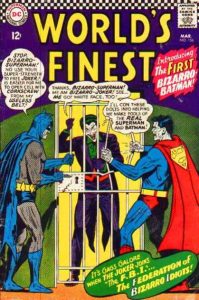
For our purposes, checkers represents National Periodicals, later DC Comics, marketing strategy beginning in February 1966 through August 1967. Known as the checkerboard stripe, DC branded its most popular titles so consumers would recognize their books on newsstands and spin racks.
Common belief is the campaign wasn’t as eye catching as hoped.
To celebrate, wear some checkered clothing, learn more about Nixon, play the board game or simply read some Silver Age DC.
Oh, and this is also known as National Dogs in Politics Day. Woof.


Amazing Spider-Man (1963) 213-221
Remember when you really noticed comic books? Not just as bathroom reading material or a quick way to pass a lazy summer evening. No, I’m talking about when you actually started collecting them; putting together story arcs. Seeking out what came before.
For me it was the late 1970s. By the early 80’s I was smitten. The life-long affair was underway.
Amazing Spider-Man was always a first choice. This was about the time Spidey was celebrating his bicentennial. Today that era isn’t highly regarded, but will always be part of my literary pantheon.
I followed his adventures through Mesmero and Kraven and Fusion to the first Hydro Man. The Black Cat made her second appearance and Madam Web began to help our hero.
Along the way we were introduced to Peter’s neighbors. One of which had a hankering for some country and western and would caterwaul loud enough to keep Pete up at night.
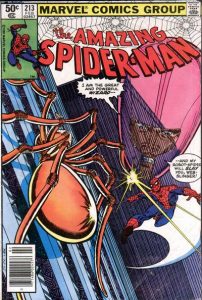
Amazing Spider-Man 213
Peter couldn’t be sure who it was, but he had his suspicions. Namely a tall, lanky gentleman with a penchant for cowboy shirts.
Imagine Peter’s surprise when he accidentally knocked a hole in their shared wall only to find the culprit was a short, bearded man he’d seen around the building in a business suit: Joseph Pincus.
Though he went by the stage name Lonesome Pincus.
The awkward meeting led to a passing friendship. When Pincus landed a gig at the Brooklyn western hotspot, Mickey’s, he slipped Peter an invitation and a pass.
The initial outing could not have gone worse. Pinky’s set was booed and jeered until broken up by villain of the week Ramrod. Mad he’d been denied a chance to perform at the same bar, Ramrod had poisoned the beer causing patrons to riot. Switching genre’s, Pinkus turned off the country and poured out the blues. The old adage of music calming the savage beast proved true and Pincus saved the day.
This took place between Amazing Spider-Man issues 213 and 221.
All this to set up today’s non-holiday, International Country Music Day.
International Country Music Day was established some time around 2003 on September 17 to commemorate the birth date of Hank Williams.
Williams is considered one of the most influential country and western recording artists. In a short 29 years, Williams recorded 35 singles, each reaching a top 10 spot on the Billboard Country & Western Best Sellers chart. Eleven of them topped the list.
Even if you don’t turn the dial over to some honky tonk, pick up those Spidey issues and give ‘em another try.


Hero’s World 2
I’ve said it before and I’ll remind everyone, it wasn’t always as easy as it is today to fly your colors. There was a time when comic book fans made due with an iron on patch on a shirt or a – yes, I’m going to go there – 7-Eleven cup.
Mego brought us the World’s Greatest Superheroes. Mead had some notebooks for school. There were some cheap rack toys licensed throughout the years.
But, where did we have to go for some reach comic book merch back in the day?
Hero’s World solved that conundrum.

Hero’s World 2
This was better than the Sear’s Wishbook – for those who might remember that perennial prize that heralded the Christmas season.
I can still recall coming in the door after school and finding that grail sitting on the end table, ready to be worshipped while pursuing hoped for presents for the coming Christmas season.
You knew the holidays were coming when this arrived.
Hero’s World began in the Marvel Comics offices with Ivan Snyder, head of licensing for the House of Ideas. He was in charge of the mail order business in the early 1970’s. Marvel was later purchased and the licensing portion of the company farmed out.
Snyder formed his own company in 1975 titled Superhero Enterprises out of his basement. He would expand to a brick and mortar location in New Jersey including a catalog showroom store. Business grew and he opened a second store where he added DC Comics merchandise.
When Marvel and DC trademarked Superhero, Snyder was forced to change the business name to Heroes World. Business continued to grow and soon Heroes World had expanded to 12 locations. In addition, the catalog portion continued.
Along the way, Heroes World began to distribute comics. Coming full circle, Heroes World was purchased by Marvel Comics in 1994. It’s purpose was to serve as Marvel Comics sole distributor.
However, it proved incapable to keeping up with demand causing Marvel to admit defeat and return to Diamond Distributors in 1997 to continue book disbursements.
Here’s the first issue of Heroes World catalog.
Maybe this will bring back memories. If not, it acts as a curiosity from a past time before the Internet and ease of current purchasing practices.


Better Late Than Never
I thought about posting this a day late to stay faithful to the non-holiday, but then how would any of you know that today is National Be Late for Something Day?
Today is a day to procrastinate. Not concerning anything important, but one aspect of our life that may cause us to miss something important we may not realize we’re missing.
In short, focus on something we normally take for granted like a relaxing walk, a good book or paying attention to those around us we may take for granted.
Now, if you can believe what you read on the Internet, it was the Procrastinators Club of America who founded National Be Late for Something Day in keeping with their bylaws and beliefs. September 5 became the magic day for some reason.
Though not a member of the Procrastinator’s Club – that we are aware of – Bartholomew Henry “Barry” Allen has been named spokesperson for the day.
Those familiar with the bringer of the Silver Age understand why; Mr. Allen was habitually late for pretty much everything in his alter ego life. Future wife Iris West was the first to chide Barry on his tardiness as she was often on the end of his late arrivals.
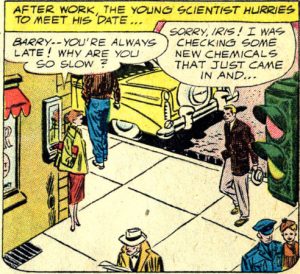
First four color chiding of Barry Allen by Iris West in Showcase #4.
Of course, the late-to-the-party quark was the yin to his Flash’s yang.
His trademark tardiness was evident as early as his first appearance in Showcase issue four that heralded the dawn of the Silver Age and opened the door for super heroes to return to the four color world.
With origins and emcees over, return to your regularly scheduled day, but slow down and relax. If it’s not life threatening, put it on the back burner and see what you can find that is probably more important than you thought.


Frankenstein (1945) 1
I don’t know about you, but I’m already anticipating Halloween. Closing out the month with Frankenstein Day just fuels the desire.
Yes, yes, this is supposed to be about the man, the myth, not the monster. But, it’s gonna be.
First, let’s look at the creation of both man and monster. It starts in the “Year Without a Summer” in 1816. The 1815 eruption of Mount Tambora caused a long, cold volcanic winter. Like many, Mary Shelley, 18, and her lover and husband-to-be, Percy Bysche Shelley were vacationing in the Switzerland Alps by Lake Geneva.
As the log fire radiated warmth and comfort, the small group attempted to make themselves uncomfortable with French ghost stories from the book Fantasmagoriana. Host Lord Byron tasked his charges to write a ghost story of their own.
While spectral tales eluded her, Mary found herself focused on the possibility of a reanimated corpse.
So began what she believed would be a short story. Percy Shelley encouraged her to bring not only the protagonist to life, but the yarn as well. What began as a day dream soon transformed into a full fledged novel.
Over time, the classic has been adapted into pretty much any medium imaginable. We’re concerned with its first foray into the four color world: Prize Comic’s Frankenstein.
The monster, now named Frankenstein, was first introduced to comic readers in Prize Comics issue seven in 1940. Writer Dick Briefer – using the non deplume Frank N. Stein – brought the good doctor’s creation into the 20th century setting him against the New York City backdrop. Helping with today’s confusion of monster and doctor, Briefer dubbed the monster Frankenstein.
Being a patriotic monster, Frankenstein joined America in its fight against the forces of evil in Europe during World War II. He would join with a female vampire and male zombie for the remainder of the conflict.
Following the war they would return to the states – New York City – and open a hotel for monsters.
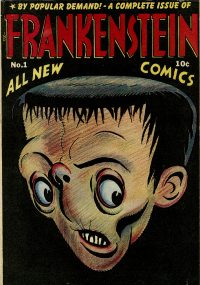
Frankenstein (1945) 1
In 1945, the monster was given his own comic book. He would settle in a small town with neighbors Dracula, the wolfman and others of the creature ilk. This humorous take would last three years before Breifer returned the monster to his more horrific roots for three remainder of three title’s run that ended with issue 33 in November of 1949.
Frankenstein Day is celebrated Aug. 30 each year in honor his creator’s birthday. Commemorate with some Universal horror, Hammer color or some simple vintage four color.
Today is not to be confused with National Frankenstein Day celebrated Oct. 31.


The Justice League Recombination
Of the 365 days in the year – 366 during Leap Year – today is tailor made for myself, Jeff and most readers of this page.
Today is Find Your Inner Nerd Day.
Most of us need not dig that deep.
If you’re here, it’s probably out of more than curiosity. Hopefully it’s to share in the culture we embrace.
In celebration of Find Your Inner Nerd Day, we’re turning the dial back on our television sets to Dec. 10, 2010, for the 11th episode of the fourth season of Big Bang Theory. More specifically, The Justice League Recombination.
If you tuned in that Monday evening, you were one of 13.24 million viewers.
Even though the episode aired before Christmas, it commemorated New Year’s Eve. The gang, plus Penny’s early on-again, off-again boyfriend Zac, gathered at Stewart’s comic book shop to celebrate with a costume contest. Dressed as the Justice League, Sheldon, Leonard, Howard, Raj, Penny and Zac took first place as the countdown began for 2011.
For 12 seasons – 279 episodes – Big Bang showed us it’s all right to fly that geek flag with pride. We watched kindred spirits live in the spotlight a life many of us hid in the shadows. They moved (super) hero worship, D&D and Japanese animation from the back of the bus to a front row seat. It was a revelation – and revolution – making Star Wars t-shirts fashionable.
Big Bang Theory took a season to gain traction, but by its fifth season had a premiere viewing audience of 14 million. The show was in the top 10 for seven of its 12 seasons. It reached number one during the 11th.
It was nominated for an Emmy for Outstanding Comedy Series between 2011 and 2014. Jim Parsons would take home the Emmy for Outstanding Lead Actor in a Comedy Series four times and the Golden Globe for Best Actor in a Television Comedy Series.
Coincidentally enough, Find Your Inner Nerd Day was founded a month prior to Big Bang airing, Aug. 23, 2007.
Find Your Inner Nerd Day was founded by Christopher Reaves Messina when he posted a tweet that created the modern hashtag. Since that time, #FindYourInnerNerd has become a digital hotspot to meet and greet those with similar interests and discuss fandoms and other geek topics.
Oh, and the name “nerd” was created by none other than Dr. Seuss in his book If I Ran the Zoo.
Fly the colors high today – and every day – as we celebrate our individual and shared interests. This is a life meant for us.


Tales to Astonish (1959) 27
Welcome to the non-holiday that doesn’t have a specific date. Welcome to National Flying Ant Day. At least in Great Britain.
Flying Ant Day is officially recognized sometime in July or August. Usually when the weather turns sultry. The hot and muggy temperatures seem to bring the Lasius niger for a nuptial flight to start their own colony.
Which is why ants sprout wings; they strike out to colonize when their current community becomes too large to support additional numbers.
While that’s all well and good for the whole circle of life concept, we’re gonna focus on a different species of ant. The Ant (Man) of the Marvel Comics genus. Specifically the one created by Stan Lee, Larry Lieber and Jack Kirby.
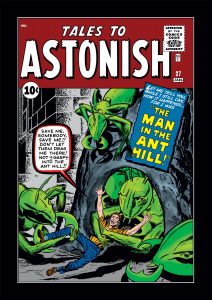
Tales to Astonish
(1959) 27
Dr. Henry Pym was first introduced in Tales to Astonish number 27 in 1962. With super heroes retaking the four colored world, Pym was quickly inducted into the spandex society eight issues later.
Pym would battle crime and injustice to avenge the death of his first wife. With the aid of his Pym Particles, that allowed him to alter his size, and a cybernetic helmet to communicate with ants, the shrinking hero became a founding member of the Avengers with his second wife, Janet van Dyne, the Wasp.
Others would adopt the mantle when Pym doffed his original persona for other alter egos including Giant-Man, Goliath and Yellowjacket.
Tying the hero with the day is Pym’s ability to communicate with ants, even the flying variety, and use them as a mode of transportation.
So, if you see the winged insect, don’t worry, they’re not interested in you or your picnic. They’re just off on their honeymoon.


Power to the People
The decade that brought us disco, Watergate and leisure suits wasn’t a complete waste of time.
That same decade also brought us Star Wars, Megos: The Worlds Greatest Superheroes, and any number of new characters from both Marvel and DC. The 70s also brought these heroes to life. Or, Power Records did. Or at least their voices.
An imprint of Peter Pan Records, Power Records served up vinyl platters of adventures straight from the comic books and, later, new stories to thrill over.
The parent company began in 1940 as Synthetic Plastic Company pandering to the youth market with music. Later they formed Peter Pan Records and became known for book-and-record sets.
Peter Pan would license popular trends like G.I. Joe and television shows offering recorded stories complete with voice actors like the old radio shows. The difference being the stories would were accompanied by an illustrated booklet to follow along with.
Peter Pan turned its attention to comic books as their popularity grew. Under Power Records, Spider-Man: Mark of the Man-Wolf (PR 10) was released as a 45 RPM complete with abridged 20-page comic book adapting Amazing Spider-Man (1962) issues 124 and 125.
It would later be re-released on a long playing (LP) 33 1/3 with three other Marvel comic book adaptations.
They would include The Incredible Hulk: The Hulk at Bay (PR 12) from Incredible Hulk (1968) issue 171; Captain America and the Falcon: A Phoenix Shall Arise (PR 12) adapting Captain America (1968) 168; and The Fantastic Four: The Way it Began (PR 13) from Fantastic Four (1961) 126.
Power Records 14 through 17 would celebrate Marvel’s monster mags. The Monster of Frankenstein, Dracula Terror in the Snow, The Man-Thing: Night of the Laughing Dead and The Curse of the Werewolf were adapted stories from each of the titles.
Marvel also retained the rights to the Planet of the Apes franchise, first publishing the movie adaptations in a black and white magazine, then colored versions in comic book format. Four of the five films were used by Power Records: Planet of the Apes: Planet of the Apes (PR 18), Planet of the Apes: Escape From the Planet of the Apes (PR 19), Planet of the Apes: Beneath the Planet of the Apes (PR 20), and Planet of the Apes: Battle for the Planet of the Apes (PR 21).
For PR 24, Power Records and Marvel would release Spider-Man: Invasion of the Dragon Men, an original adventure.
It was a theme DC Comics would use for its subsequent offerings.
Batman: Stacked Cards (PR 27) was DC’s first outing followed by Superman: Alien Creatures (PR 28). Robin Meets Man-Bat (PR 30) followed.
All were original stories. Each was done either by Neal Adams or he and Dick Giordano’s art house Continuity Associates.
DC also released Superman The Man from Krypton and City Under Siege, PR 32 and 33 respectively. The last outing would be Wonder Woman: The Secret of the Magic Tiara (PR 35).
Marvel’s was Conan the Barbarian: The Crawler in the Mists (PR 31).
Extended Plays, or EPs, also existed. These were usually offered without booklets.
These may seem a bit outdated when multi-million dollar movies adapting these same characters are available to anyone with a cellphone, but they do capture the technology of the time straining to keep up with entertainment desires.
For a taste of the past, click below.


“Inee Choh”
In an effort to de-homogenize the world’s collection of the greatest super heroes, Hanna-Barbera created several new members for the Super Friends. Among the tokens is our emcee, Apache Chief who is heading up International Day of the World’s Indigenous People.
Representing the indigenous population of North America, Apache Chief first appeared in The All-New Super Friends Hour. Regis Cordic voiced the addition before Michael Rye replaced him in Challenge of the Superfriends.
Viewers learned Apache Chief’s origin in History of Doom. The young brave and a tribal elder are attacked by a bear. The elder gives his protege a magic powder allowing the youth to grow to 50 feet when reciting the nonsense words “inee choh.” In Hanna-Barbera Native American, it means “man big.” Translated from true Western Apache, man big or great man is really “nde zhoo.”
Rather than create a villain for Apache Chief, Giganta became part of his lore. Originally a Wonder Woman foe, the towering villainess was written in after she stole the pouch of magic powder from the Chief.
Apache Chief would appear as window dressing in every episode but one, yet only have a speaking part in half of said cartoons.
Other heroes created to flavor the animated cultural melting pot included Black Vulcan, El Dorado, Rima the Jungle Girl and Samurai.
International Day of the World’s Indigenous People is observed Aug. 9 to raise awareness and celebrate the triumphs and achievements of indigenous peoples. The United Nations adopted a resolution in 1992 to make 1993 the International Year for the World’s Indigenous Peoples.
The following year the UN General Assembly passed resolution 49/214 proclaiming Aug. 9 each year for the following decade as International Day of the World’s Indigenous People for the coming decade.
After the first 10 years had passed, the UN extended the day for another decade. Since then it has been on the calendar each year.
Today, an estimated 2.51-million Native Americans are recorded. An estimate of nearly 60 million were said to have inhabited North American in 1492.
Manifest Destiny fueled relocation and genocide toward Native Americans since the time of settlement by Europeans. The Indian Removal Act of 1830 followed years of conflict between colonists and Native Americans. Over 100,000 indigenous peoples were forcibly removed from their native lands due to the Removal Act.
In addition to relocation, invaders used forced marches resulting in the deaths of thousands much like the Jewish genocide a century later.
Today is a day to remember all indigenous peoples; while we do, maybe we should start at home.


Fantastic Four (1961) 200
Welcome to October.
The 10th month is the first of the big Trifecta leading to Thanksgiving and Christmas. To celebrate, we’re going down another rabbit hole like we did last December and February.
First, we’re gonna look at the costumes that defined our hobby. The costumes we begged mom and dad for each Halloween so we could represent the good and bad of the four-color universe we lived in.
The price tag was a mere $1.98. American. Not Latverian. Makes you wonder if Doom allowed Latveria to adopt the Euro.
Probably not.
Anyway, Ben Cooper was the answer to cheaply dressing children in masks that restricted breathing and costumes guaranteed to rip after the second wearing.
Ben Cooper costumes were more about anticipation. There was no subtlety with crude characterizations of who you were imitating drawn on the front along with the name of that choice.
With Doom’s ego, this isn’t a problem.
Fantastic Four
(1961) 200
Over the past 60 years and into the next 60, Doom and the Fantastic Four have clashed. Theirs is the first big rivalry of the Marvel Universe.
My favorite throw down will always be the epic showdown that climaxed in issue 200. Len Wein and Marv Wolfman planned and penned for over a year to deliver the over-sized anniversary payoff.
Doom has had a huge impact on the Marvel U appearing in pretty much every title offered since his creation.