

Posts Tagged ‘Stan Lee’
Gwenpool Holiday Special Merry Mix-Up (2016)
Red Skull – a villain created to be as evil as any of his real life Nazi counterparts of World War II – receiving a lesson on political correctness is worth the price of admission. Toss in not one, but two stories featuring one of Stan Lee’s most alliterative creations, Fin Fang Foom, and the 2016 Gwenpool Holiday Special Merry Mix Up is worth double the $5.99 sticker.
If you’re not a regular reader, some of this may be confusing, but, as stated above, it’s all worth it in the long run.
-
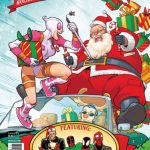
- Gwenpool Holiday Special Merry Mix-Up (2016)
-
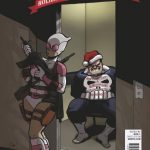
- Gwenpool Holiday Special Merry Mix-Up (2016) (Zdarsky variant)
-
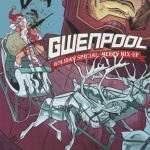
- Gwenpool Holiday Special Merry Mix-Up (2016) (Henderson variant)
-
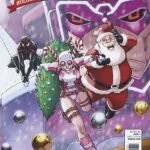
- Gwenpool Holiday Special Merry Mix-Up (2016) (Lim variant)
Bite the bullet and see where Marvel is going these days. But, start with this one.
Marvel Holiday Special (1992)

Marvel Holiday Special (1992)
As I said, the 1990s were bleak for comic books in general. One shining beacon were the early Marvel Holiday Specials.
Stan “the Man” Lee himself returned to pen the Spider-Man story, the first time since issue 200 outside of the newspaper strip. Barring Lee’s story, the star is Doc Samson’s revisionist origin of Chanukah. Even his ridiculous pony tail and post-Village People jump suit couldn’t spoil the fun.
Thanos’ touching tale of parenthood comes off as anything but contrived as do all the stories, featuring Wolverine, Punisher, New Mutants, Ironman and Daredevil.
The Marvel No-Prize Book (1983)
We all make mistakes, but clicking here isn’t one of those.
Today is a day we celebrate those who watch over our printed matter, whether it be ourselves or someone else. Today is National Proofreading Day.
A short history for the non-holiday is as follows: Corporate Trainer Judy Beaver decided the public needed to be more vigilant when it came to what they wrote. This led her to declare March 8 as National Proofreading Day in honor of her mother’s birthday.
Today we tap someone who guided so many of us through out recreational reading time: Stan Lee.
Like anyone else, Stan was fallible. Rather than cringe and hide from his literary mistakes or the gaffs of his artists, he chose to recognize fans who pointed out these errors.
Their reward?
The coveted No-Prize.
Other publishing companies instituted a similar policy before Marvel, but the House of Ideas made it famous.
The Marvel No-Prize Book (1983)
The difference between the other companies and Marvel was they provided real rewards when their continuity errors were pointed out. Marvel, or Stan Lee, chose to issue an empty envelope with a congratulatory salutation overseen by the Hulk.
The role of the No-Prize would later extend to other fan feats such as the largest comic book collection. It was also expanded so readers could be recognized for finding other errors beyond those in continuity.
In 1983 Marvel and Lee published a comic book filled with some of the company’s errors over the years. Early goofs include Lee referring to Peter Parker as Peter Palmer (not once, but twice) in Amazing Spider-Man issue one. Maybe a bigger error was actually dubbing him Super-Man in Amazing Spider-Man issue three.
Even the Jack “King” Kirby isn’t free of mistakes as Reed Richards is seen with two left hands in Fantastic Four issue 88. The issue is also accorded another entry for the lack of the Thing with the FF. However, by next issue Bashful Benjy is fighting alongside his teammates without explanation of how he got there.
Whether worried about Marvel’s miscues or not, this is a fun book.
To celebrate the day, though, learn some ways to improve your proofreading skills such as allowing time for the project to settle before revisiting it with fresh eyes.
Also recommended is to remove all distractions while perusing the project, learn your limitations and look for those first, turn off the autocorrect tool so as not to become too reliant on it, read aloud to hear mistakes, read it backward for a new perspective or even just use a different font when printing it out to see the work differently.
I promise I have looked this over – more than once – and hope it is error free so as not to serve as an ironic example of why proofreading is important. I did find two errors during the initial read through.