

Archive for the ‘Traditions & Customs’ Category
Milk and Cookies
And, what would the holidays be without traditions?
One of the most endearing is leaving cookies and milk out for Santa.
While the roots of confection and dairy go back centuries, our current habit is less than 100 years old. Children in the 1930s were taught gratitude for gifts as they Great Depression ravaged the American economy.
Batgirl keeps the jolly one full of sugar with her Christmas offering.
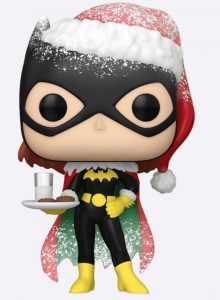
Milk and Batcookies
Hallmark Holiday ornaments (Part 2)
I hate it when Halloween is bypassed for Christmas, but we’re gonna break my self-imposed rule just this once. Hallmark is offering the following ornaments beginning today:

Santa Spidey
DC Comics Christopher Reeve as Superman Musical Ornament
DC Comics Batman Classic TV Series Batboat Ornament
DC Comics Batman Classic TV Series Batgirl Ornament
Hallmark Holiday ornaments
It’s too early for Christmas, but Four Color Holidays is not about judging anyone. Not to their face, anyway. So, let’s look at the new Hallmark ornaments available today at your finer Hallmark retailers.

Wonder Woman
Mini-DC Justice League Aquaman Ornament
Mini-DC Justice League Green Lantern Ornament
DC Comics Wonder Woman Invisible Jet Ornament
Marvel Studios Avengers: Endgame Infinity Gauntlet Ornament with Light
Marvel Studios Avengers: Endgame Thanos Ornament
Marvel Studios Avengers: Endgame Captain America Ornament
Marvel Iron Man Metal Ornament
Happy Valentine’s Day
DC Valentine’s Day cards, circa 1980.

Happy Holidays from your Heroes
You know you were loved if you woke Christmas morning to find presents nestled in superhero wrapping paper back in the day.
Not sure when this roll hit store shelves, but it was before the dollar stores of today when consumers can fly their geek flags on the cheap.
If Mental Floss is to be believed, the colorful covering we take for granted today celebrated its centennial in 2017.

Hero Holidays
The Japanese and Koreans were ahead of the curve using colored cloth for wrapping purposes at least by the 1700s though some records date the tradition around the first century. A functional manila paper was in fashion by the Victorian era though the well-to-do used a more colorful tissue paper.
This was the norm until 1917 when brothers Joyce and Rollie Hall ran out and substituted with a more substantial, higher grade of paper in their stationary store. It cost a whopping $.10 a sheet and promptly sold out.
As did the next offering. And, the next. And, the next.
By 1919 the brothers believed their find was not a fad and began marketing on a larger scale basis creating a tradition we use today.
Most know their brand by the name Hallmark.
Candy or Decoration?
Does anyone really eat candy canes.
Apparently so. Candy canes are the number one selling, non-chocolate candy in December. One point seventy-six billion are manufactured annually with 90-percent of them sold between Thanksgiving and Christmas.
The bulk of those are sold the second week of December.
Now, how many are eaten and how many are used for decoration is debatable.
Originally, candy canes – or their fore runners – were created to silence choir boys.
The choirmaster of the Cologne Cathedral in Germany would dispense the confectionary treats during the Living Crèche Ceremony. The tradition that began in 1670 migrated to the United States with August Imgard of German and Swedish descent in 1847. Wooster, OH, had the honor of of hosting the occasion.
The red stripes and peppermint flavoring were added at the turn of the 20th century.
Today Catwoman sports her Jim Lee designed costume that debuted in the Hush story arc complete with candy cane.